Are Flushable Wipes Really Flushable?
Learn the truth behind flushable wipes and their impact on plumbing. Explore common issues like drain backups and sewer line stoppages in homes.
What Homeowners in New Braunfels & San Antonio Should Know Before Flushing Wipes
Many wipes today are labeled as “flushable,” leading homeowners to believe they are safe for toilets, drain systems, and sewer lines.
Unfortunately, one of the most common causes of major drain backups we see at Plunger Pros is flushable wipes.
The reality is that while these wipes may physically flush down the toilet, that does not mean they safely travel through your plumbing system without causing problems.
In homes throughout New Braunfels, San Antonio, Schertz, Cibolo, Bulverde, and surrounding areas, we regularly respond to sewer backups and main line stoppages caused by wipes advertised as flushable.
The Problem With Flushable Wipes
The biggest issue is that flushable wipes do not break down like toilet paper.
Toilet paper is specifically designed to deteriorate quickly once it enters the plumbing system. As water moves through the drain line, toilet paper softens and breaks apart.
Flushable wipes do not behave the same way.
Instead, they tend to:
Stay intact inside the pipe
Catch on rough spots or bends
Get stuck on roots or debris
Build up over time
Trap additional waste behind them
Once one wipe gets hung up, more wipes often begin collecting in the same location until the drain line eventually becomes blocked.
Why We See So Many Sewer Backups From Wipes
One important thing homeowners should understand is that wipes often travel farther into the plumbing system before causing a blockage.
Unlike a simple toilet clog near the fixture, wipes frequently create problems deeper inside the main sewer line.
When this happens, the backup can affect the entire home.
Common symptoms include:
Sewer backing up into tubs or showers
Toilets bubbling or gurgling
Multiple drains backing up at once
Slow drains throughout the house
Sewage backing up from floor drains
At that point, it usually becomes a main line stoppage instead of a simple toilet clog.
A Real Plumbing Call We Recently Saw in New Braunfels
Recently, we responded to a home in New Braunfels that was only a few years old.
The homeowner called because the entire home was backed up and sewage was coming up through the tubs.
At first, the customer was confused because the plumbing system was relatively new and they had been careful about what they flushed.
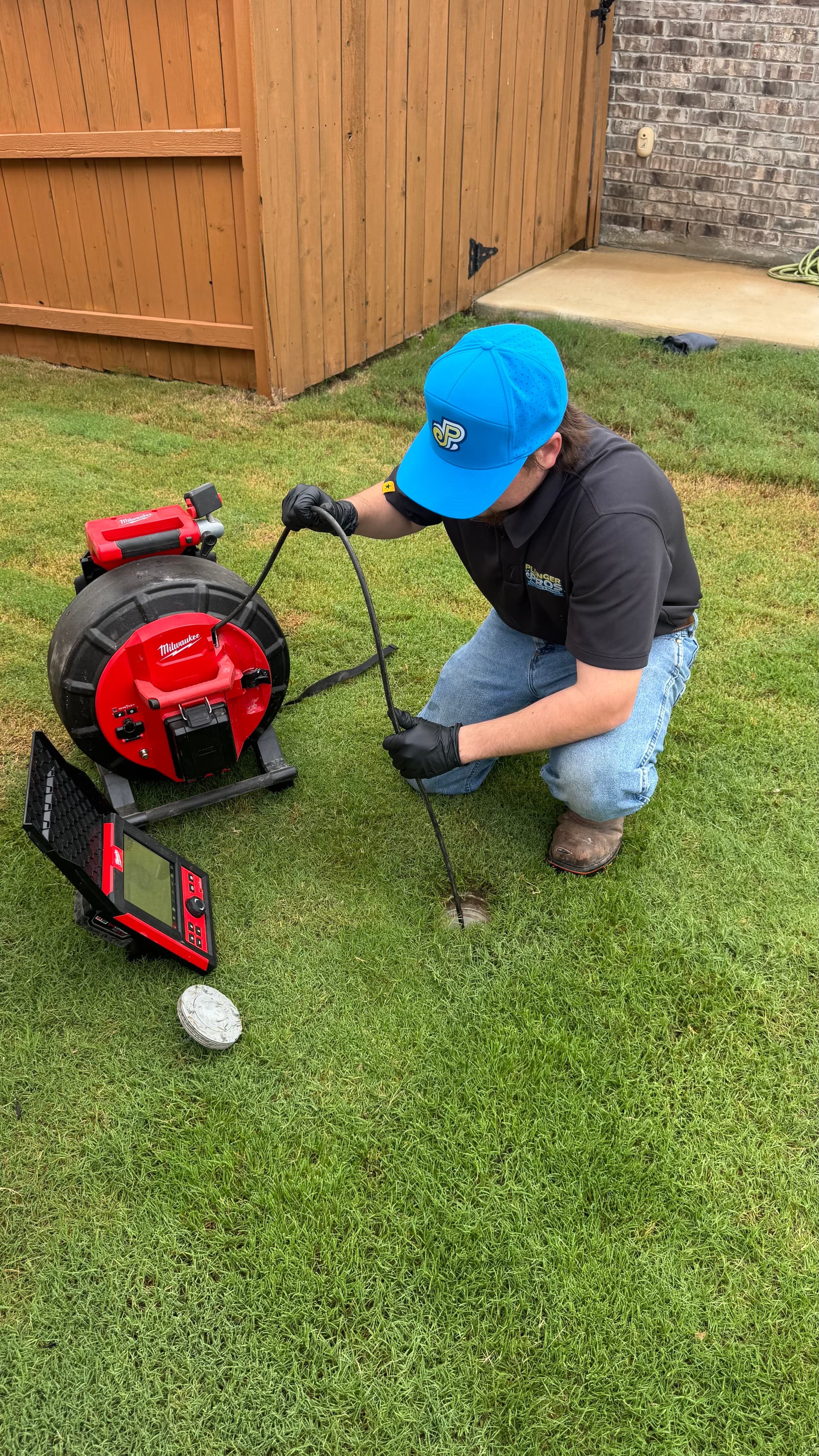
After accessing the main cleanout, we began auguring the sewer line and immediately started pulling back flushable wipes.
We spent over an hour and a half working the drain machine back and forth through the line to:
Break up the blockage
Restore flow
Remove as many wipes as possible from the sewer line
By the end of the job, we had a large pile of wipes removed from the drain system.
The homeowner was genuinely surprised because the wipes were advertised as flushable. Unfortunately, this is a conversation we have with homeowners on a regular basis.
Many wipe labels even include fine print stating:
Only flush one wipe at a time
Only suitable for newer plumbing systems
Not intended for all sewer systems
Even then, we still commonly see them cause major stoppages.
Why Some Plumbing Systems Are More Vulnerable
While wipes can cause problems in any home, certain plumbing systems are especially vulnerable.
Older Cast Iron Pipes
Older cast iron drain lines often develop corrosion and rough interior surfaces over time.
These rough spots make it much easier for wipes to snag and begin building up inside the pipe.
Low-Flow Toilets
Low-flow toilets use less water per flush. In some situations, there may not be enough water volume to fully carry wipes through the drain system.
Existing Sewer Line Problems
Wipes are much more likely to catch in sewer lines with:
Root intrusion
Pipe breaks
Bellies in the line
Improper pipe installation
Burrs left during installation
Offset or shifted pipes
Once wipes begin catching in these areas, additional wipes continue collecting until the line eventually blocks completely.
Warning Signs Wipes May Be Causing Drain Problems
If wipes are beginning to collect inside the drain system, homeowners may notice:
Slow drains
Gurgling toilets
Bubbling fixtures
Recurring backups
Sewer odors
Water backing up into tubs or showers
If these symptoms are happening repeatedly, the sewer line should be professionally evaluated before a complete backup occurs.
What Should Actually Be Flushed?
The safest rule is simple:
Only flush toilet paper.
Items that should never be flushed include:
Flushable wipes
Baby wipes
Feminine hygiene products
Paper towels
Cleaning wipes
Disposable toilet brush heads
Cotton swabs
Dental floss
Even products marketed as flushable can still create serious plumbing problems over time.
How Plunger Pros Removes Wipe Blockages
Depending on the severity of the blockage, we may recommend:
Drain snaking
Hydro jetting
Sewer cleaning
Camera inspections
Main line stoppage clearing
Drain Snaking
Drain snaking can help break through wipe blockages and restore flow.
Hydro Jetting
Hydro jetting uses high-pressure water to help clean buildup and remaining debris from the sewer line.
Camera Inspections
Camera inspections allow us to verify the line is fully clear and identify:
Root intrusion
Broken pipes
Bellies
Heavy buildup
Additional blockage points
Preventing Sewer Backups From Wipes
The best way to prevent wipe-related sewer backups is simply avoiding flushing them altogether.
Even in newer homes with newer plumbing systems, we regularly see wipes create major drain problems.
A product being labeled “flushable” does not necessarily mean it is safe for your plumbing system long term.
Sewer Backup or Main Line Stoppage in New Braunfels or San Antonio?
If your drains are gurgling, backing up, or sewage is coming up through tubs or showers, the issue could be a main sewer line blockage caused by wipes or other debris.
Plunger Pros provides:
Main line stoppage clearing
Drain snaking
Hydro jetting
Sewer camera inspections
Sewer diagnostics
Emergency plumbing services
We proudly serve:
New Braunfels
San Antonio
Schertz
Cibolo
Bulverde
Surrounding areas
Our goal is not just restoring flow temporarily, but helping homeowners understand what caused the problem so it can be prevented in the future.
Plunger Pros
Plumbing done the proper way.
M45279
(830) 356-2141